Monday, 27 June 2011

Our 1st Visit to Marina Barrage

Marina Barrage is Singapore's first reservoir in the city and has been hailed as one of the greatest man-made marvels in the world. Since its opening in November 2010, I've been bugging the hubby to take the whole family there as I wanted to visit this beautiful place.

Marina Barrage

We finally got the chance to visit for the first time yesterday when we were invited by the hubby's colleagues to join them for kite flying at Marina Barrage.

His colleagues found a great sheltered spot which was so windy that baby could take a nice nap

The hubby and I ate some lunch with his colleagues while waiting for Girlee to wake up from her nap. The weather was sunny with nice winds and the hubby was just commenting on how nice the weather was. I told him to stop saying that or he'll jinx it. Yes, I'm superstitious that way.

True enough, the sun started to hide behind dark grey clouds and the winds got stronger. I thought we had better start our kite-flying before it actually started raining.

Girlee woke from her nap just in time for kite-flying

I had just bought this kite from Chinatown for $6.90 and totally forgot to tie the string to the handle (I only tied the string to the kite). As the string was only 20m long, the kite was let loosed like a dog without a leash once the string ran out and off it went drifting in the sky...

...before landing on the fountain below!

Yes I know, I'm such a dumbass! What a great way to make a first impression -_-

I had to drag my ass down three levels to get the soaking wet kite and roll up the string (which thankfully was only 20m). Fortunately I took the advice of the store keeper and bought another roll of string which was 100m long. Decided to use this one instead and this time the kite was off to a higher place.

Daddy and baby looking like they were flying the kite...

...when in actual fact, it was mummy who did the kite-flying. Yup, daddy did not fly the kite with one hand and carry baby with the other. That would be suicidal. *laughs*

But as you can see, the dark clouds behind the hubby started to loom nearer and the winds got so strong that it was really hard to control the kite. It also started to drizzle and we decided to seek shelter at our spot till the rain blew over.

Girlee's 1st picnic!

We decided to continue our lunch while waiting for the drizzle to stop. When it finally did after 15 minutes, the sun was shining so brightly we had to open our extra-large Ferrari umbrella to prevent Girlee from getting sunburnt (she was already wearing sunblock).

Under the big black Ferrari umbrella

She still got dark anyway as only her head was fully shaded.

Daddy and Girlee watched while mummy flew the kite

I love these two pictures that I took myself! Hehe. It was a stroke of luck (and some skill) *grin*

Hubby's turn to fly the kite

I took over from the hubby so that he could be on kite-flying duty. Unfortunately, after a while the winds changed direction and the kite got caught in the poles that provided shade to our picnic spot! Sigh. It was another round of kite-rescue and string rolling again.

And that wasn't the only time our kite required rescuing! As there were more and more people flying their kites there, our kite got caught in someone else's string and down it went, again!

Can you count the many kites in the sky?

There were simply too many people flying their kites (at least 30!) and our pitiful kite couldn't compare to the others. After all the 'unfortunate events', it just couldn't fly normally anymore no matter how hard we tried (and believe me, we tried really really hard).

Ah well. The hubby promises to get a much better one in future so hopefully we will have better luck next time.

Successful 1st family picnic at Marina Barrage!

Despite the fact that the kite didn't fly well as planned, I was glad that Girlee really enjoyed herself. We'll definitely be back again!


~~~~~~

This post is part of my MadPsychMum Fun in Singapore Guide to all things exciting for kids! 
Check out other fun playgrounds and attractions in Singapore! =)


You can also follow us on Instagram or join us by using our hashtag #mpmfuninsg

Thursday, 23 June 2011

My Failed Transition to Formula

As many of you know, I have been breastfeeding my baby girl since her birth (in the delivery room itself no less). It was never a doubt in my mind that I would breastfeed as I have read about the many benefits of breastfeeding. The minimum time you should breastfeed your baby should be at least 6 months to a year and thereafter according to the preferences of both the mother and the child.

The preference of this mother was certain: Breastfeed her until one year old then make the switch to formula.

The preference of the baby of said mother: Formula? Bleah! NO WAY! Absolutely no freakin' way!

And believe me, we tried everything (that we can think of that is).

We actually started introducing formula to her when she was 1.5 months old to supplement breastmilk whenever I'm overseas and there isn't enough stored breastmilk for her to drink. She seemed to be ok with it so I thought everything was fine.

Until she turned 10 months old and became smart. I had wanted to swap out one of her feeds to formula (i.e. the midnight one) so that she can sleep better throughout the night. I chose to start earlier as I know babies need some time to switch completely to formula (as adviced by my friend Belle).

But she would have nothing of it!

She would take one lick of the formula milk before cringing her face and pushing the bottle away like it was the worst thing she has ever tasted in her entire life. And then she gives me this look as if saying, "Look ma, this stuff right here tastes like crap! Seriously, why the heck would you give me this vile tasting 'poison' when you got perfectly tasty stuff right there (looks in the direction of my you-know-what)?!?"

I tried to ignore her cries. I tried leaving the room and let my mum-in-law feed her. But my mum-in-law would come by my room later complaining that my girl would rather drink barley water than drink the 'vile tasting poison'. We tried mixing breastmilk with formula to try and fool her into drinking it. She took one sip of it, gave me the look of disgust that obviously said, "did you think I'm dumb ma? This is soooo not my milk!", then pushed the bottle away and refused to drink from it like ever again. True story.

And it's definitely not because she doesn't like the bottle. She will drink from the bottle if it's breastmilk that I had just expressed.

Girlee drinking my expressed milk from the bottle

Girlee, my food critic extraordinaire, can taste the difference between fresh mummy's milk, frozen mummy's milk and the 'vile tasting poison'!

I kept thinking perhaps she would grow out of it. So I tried again and again but she would have nothing of it.

"No way ma.. NO NO NO!!" (what my girl would say if she could talk) *shakes head*

I was actually pretty disappointed with her response as I got all these free samples of formula milk given to me by my aunt's relative, who's an OBGYN at a local hospital. She receives samples of formula milk by various companies regularly to distribute to her patients so she kindly passed some to me.

Sample Milk Formula: Stage 2 (for 6 months onwards)

Ok, so I was a bit greedy. By some, I really mean 15 cans. Hey, we're a one-income family so every bit of saving counts alright (1 can of milk costs about S$20++ at the supermarket)! They are absolutely brand new and only expiring in mid-end of 2012.

Hence, in order not to waste almost S$300 worth of formula milk (seriously think of all those poor babies with no milk to drink), I'll be having my first ever giveaway! Well.. sort of.

If you would like to get one or more cans of these formula, just leave me a comment or email me on the number of cans and the brand (subject to availability) that you would like. This giveaway is first come first served, while stocks last! =)


P.S. My baby's dislike for formula has nothing to do (as far as I know) with the quality of the milk. Although absolute care had been taken to store them appropriately in a cabinet in the kitchen, I would not be held responsible if the quality of the milk is compromised due to manufacturing error so please exercise discretion and follow the manufacturer's instruction.


UPDATE: ALL the formula milk has been taken up! Thanks for expressing interest in my 1st giveaway :)

Sunday, 19 June 2011

Why God Gave Us Daddies

Mummies are just not Daddies.
Baby Girl's Daddy
Daddies work hard to provide for the family..
Daddy's desk at work
..so that mummies can stay home, take care of the baby and watch them grow.

Daddies give their children a sense of security..
Sitting comfortably on her daddy's shoulders
..they protect, no matter what.

Daddies give their best love..
With her daddy at MBS
..even if it means that they will have nothing left.
Credits: babyblues.com
Daddies are amazing. And there is just one particular that I love more than any other..
My own Daddy.
I have the utmost admiration for him. He entertains us with his enormous sense of humor and great positivity in life. If he falls, he gets right back up and tries again. And again. And again. He never gives up. He says he can't, because a family at home needs him not to give up. He works very hard in extremely tough foreign conditions in order to feed our family. He even paid for my entire university fees so that I never have to worry about it and could focus on my studies. If he can afford it, my dad will definitely get me whatever I need/want.
With my daddy at my graduation
The financial backing of my father and the hubby is the reason why I could further my studies and graduate with a higher degree.

Mummies are just not Daddies.

Daddies are special and that's why we love them =)

HAPPY FATHER'S DAY!

Wednesday, 15 June 2011

Cleebo by Sophie & Friends

When Sophie & Friends first contacted me to do a review on their new product, I was excited. It was a device that helped you get rid of the "gold" in your baby's nose.

Credits: opus-innovations.com

If your baby is like my baby, he/she will have lots of it. And I used to dig 'em out using my little pinkie (which failed miserably), cotton buds and just about anything I can get my hands on that is small enough to get in. But none of them worked (and some may even cause her immense pain)!

I was very happy to try out the "gold-diggin" device also known as Cleebo, which has been developed by Opus Innovation Limited.

Girlee is curious with the newly-arrived Cleebo

The packaging caught my eye immediately. And so did Girlee. The different coloured tips are meant to give your child a choice of colour before engaging in the all-important task of "gold-digging".

Cleebo = like a tweezer but with soft tips

But before I could try out the product, there must be something that required digging doesn't it? So I waited a few days before I finally spotted the "gold". Time to pull out the big-guns!

According to the instructions, there are three ways one can use the Cleebo:
Option 1: Use as conventional tweezers
Option 2: Close both tips together & use with a dragging action, similar to using a cotton bud
Option 3: Pull tweezers wide apart and use one side only as noted in ‘Option 2’ above. This method is effective for tiny nostrils. Should the tweezer tips remain too far apart, pinch the tweezers immediately above the ‘circle’ between the thumb and the forefinger and squeeze to reduce the gap as required.

As I was a novice, thought I would try out the conventional tweezing method as that made the most sense to me.

My baby was extremely wary of anything sticking up her nose as expected possibly due to the many nightmares she has had of me prodding all sort of stuff into it. After much struggling, I managed to hold her down long enough to test it.

Using the Cleebo on my struggling baby

As you can see, she soon realised that there was nothing scary about the Cleebo. The soft tips didn't hurt her and it got the job done in 5 seconds (sans the 1 minute of struggling to get the Cleebo in).

They should've sent this product to me months ago! Could have saved me from all that struggling and nightmares! *laughs*

If you buy Cleebo from Sophie & Friends now, they would even donate S$3.58 to the Japanese Red Cross Society. Not only do you get a product that helps you and your baby, you get to help others too. Perfect! =)


Disclosure: A complimentary Cleebo was received from Sophie & Friends for the purposes of this review. No monetary compensation was received; all opinions are my own.

Monday, 13 June 2011

7 Things You Didn't Know About Our MRT


My handsome brother in the Singapore Police Force

Recently my handsome brother completed the Basic Police Training Course as part of his National Service to our country and was posted to the Public Transport Security Command (PTSC) unit of the Singapore Police Force (proud of you bro!).

Showing off his certificate in the MRT

Only about 5-10% of all cases handled by the PTSC are related to terrorism (thank God that they are always on the lookout for potential shady characters!) while the other 90-95% of the cases are mostly civilian affairs like outrage of modesty and complain-y auntie types (you know who I'm talking about).

Anyway, he recently told me some interesting stuff about our Mass Rapid Tranport (MRT) system that I never knew for all the 20 over years I have been taking the trains.

So I have asked my brother to kindly send me the information for me to write up and here you go!

7 Things You Didn't Know About Our MRT

#1: There are a million cameras covering 99.99% of every train station and train in Singapore

Credits: stomp.com.sg

So if you think you can scratch your butt, dig your nose or take someone's wallet from their bag and no one will know, you got something else coming! The zillions of cameras that officers (such as my brother) have to monitor can track your every move from the time you enter one station to the time you leave another. The cameras even have the power to zoom in to your face so you can forget about pretending that you're not Shady-character-X-who-just-pickpocketed-at-Station-Y.

If you commit a crime on the MRT (or somewhere else for that matter but flee using the MRT system), you can be sure the police will be there at your destination with handcuffs in their hands ready to take you down. True story!

It does not pay to commit crime. Especially in the MRT. So don't do it!

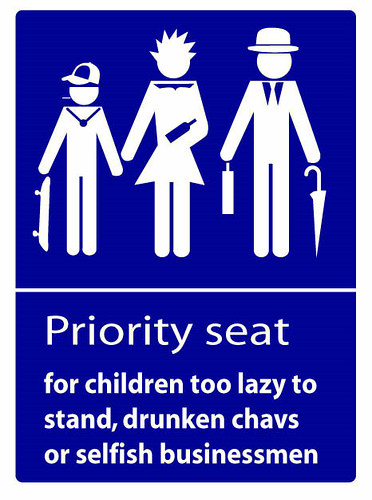
#2: It is not against the law if someone doesn't give up the Priority Seat

Take for example this scenario: Young man sits in Priority Seat. Pretends to sleep. Old complain-y auntie (OCA) with limp and carrying fat baby glares at him. Said young man continues 'sleeping'. OCA complains to police officer standing nearby. Police officer tells her nicely, "sorry, this is not against the law. I can't do anything."
This scenario happens more often than you think. Seriously, it's better for you to record the whole thing and upload it to Stomp/facebook/twitter than to approach the police. Leave it to societal pressures to do the job.

Credits: dennoir

Perhaps we should also have something like the above spoof created to poke fun at inconsiderate folks.

#3: On the contrary, the following ARE against the law:
  • Bringing prohibited luggage or other items: Fine $500
  • Bringing animals (even hamsters): Fine $500
  • Throwing items into the railway tracks: Fine $1000
  • Non-compliance with instructions: Fine $500
  • Entering or remaining in train when it is full: Fine $500
  • Consumption of food or drinks (including mineral water): Fine $500
  • Spitting, littering or soiling: Fine $5000
  • Causing nuisance: Fine $500
  • Loitering (e.g. when waiting for friends to arrive): Fine $500
  • Interference with doors or operation of doors (i.e. standing holding onto the doors to prevent it from closing): Fine $1000
  • Transferring goods between paid and unpaid areas without going through the gates (e.g. friend A passes a box to friend B over the barrier): Fine $2000
  • Damaging a ticket: Fine $5000
  • Failure to pay or produce a ticket: Fine $1000

#4: During peak hours, take the next train if the first is too full
Credits: theonlinecitizen.com
The next one is usually just 2 minutes away and may even be empty if its coming from the depot in order to cope with the large crowd of commuters. Don't be like one of those Kiasu (Singaporean slang for "scared to lose") uncles who run like crazy to squeeze into a train that is already packed like sardines, only to be slammed by the doors. Besides, it is against the law (see point #3)!

Crowded trains also increase the likelihood that you will meet with a case of outrage of modesty (OM cases as the police likes to call it) or a fight with another angry commuter. For example, there was a case where two men fought with each other in a space of only 5cm between them. Why? Because they were in each other's space -_-

#5: The job of the MRT police officers is NOT to give directions

You cannot imagine the countless number of people asking patrolling officers for directions to so-and-so location. Please don't.

#6: Dressing like a shady character carrying a big black bag will definitely get you stopped by a security personnel

Duh! It would be a miracle if you could walk through the gates without getting stopped. So bring a small bag as far as possible.

#7: Finally, doing the following could possibly save your life if you fell into the MRT tracks by accident
  • Don't panic
  • If there is no incoming train, ask someone to press the emergency stop plunger and quickly walk to the other end of the platform
  • Unless you're some NBA star, don't try climbing up the platform as it is 1.5m high
  • Unless you are Usain Bolt, don't try to outrun the train travelling at 30km/h while running at 5km/h on extremely rocky terrain. You're likely not to make it to the other end in time.
  • Unless your friend is Superman, don't get your friend (or any other person) to pull you up the platform as you will most likely pull him/her into the track with you
  • Unless you are Superman, don't think that lying flat on the track and letting the train roll right over you will do the trick. It would not. You will just get cut into many pieces.
  • Unless you are Magneto (X-men), don't try to run to the railings opposite of the platform as a current of 750V DC (direct current) passes through it. You are also likely to fall through the large gaps between the railings.
  • If there is an incoming train, your best bet is to hide under the tip of the platform (where there is a small space) and wait for rescue
    See the space just under the tip of the platform?
    Credits: singaporesnapshots.com
Credits: mof.gov.sg
So, until all the platform barriers are erected in all of the stations, it pays to take note of these tips as you never know when you need it =)

If you're like me and don't know this, well, now you do *laughs*

Sunday, 12 June 2011

Double Helix Bridge & Marina Bay Sands

Ever since we celebrated our anniversary at the Marina Bay Sands (MBS), I've been wanting to go back and visit the shopping mall again.

So we decided to pay MBS a visit last Thursday just for fun.

Can you believe that I have never been to the Double Helix Bridge till now?

Double Helix Bridge at Marina Bay Sands

The view was awesome! Thanks to the amazing weather, we had a really nice walk across the bridge while admiring the beautiful skyline.

If you're like me and always wondered if this oddly shaped building is some sort of observatory or something..

Lotus-inspired Art & Science Museum

..it's actually the Arts and Science Museum!

We didn't check it out as my girl is still too young. I'll have to wait for her to grow up a bit more before we do. It certainly looks very cool on the outside though =)

Before we could fully explore the mall, I had to nurse my very hungry baby at a nursing room at MBS (there's one next to almost every toilet).

The mall was really interesting. Other than being filled with rows and rows of shops selling luxury products, Shoppes at Marina Bay Sands is also home to a grand theatre, a skating rink and a man-made river that you can take a sampan ride for just S$10 per person.

Ice-skating rink within Marina Bay Sands

The nice thing about the skating rink is that parents who didn't want to skate could just hang out at the Rasapura Masters food court just next to it and watch their kids. I was actually pretty surprised that there was no one skating on the rink when we were there as it was the school holidays (perhaps it was also because it was a weekday afternoon).

As Girlee loved the aircondition so much that she took a nap and didn't want to wake up, my mum-in-law and I decided to take a little tea break at the food court before we set off home. By the time baby girl finally woke up, the sky was already turning dark.

But the view we saw was even more amazing.

Evening shot of Marina Bay Sands

We saw many couples taking their professional wedding photographs on the bridge. Looking at my amateur shot, you can understand why. Simply beautiful!

What a great way to end a perfect day =)


~~~~~~

This post is part of my MadPsychMum Fun in Singapore Guide to all things exciting for kids! 
Check out other fun playgrounds and attractions in Singapore! =)


You can also follow us on Instagram or join us by using our hashtag #mpmfuninsg

Friday, 10 June 2011

Understanding Pediatric Cancer (5): Personal Experience

If you have been diligently following my series of posts on pediatric cancer for the past week, thank you so much for your support! After all that information-heavy posts, I thought it would be good to end off with a post on my reflections and experiences as a researcher in the field.

My Personal Research Experience at NUH

I started sending out emails asking the Head of Department of Paediatrics of NUH and the Head of Pediatric Haematology/Oncology for permission and they gave it to me readily. However, getting Ethics approval to actually start data collection was much harder. The ethics people were understandably concerned as this was a vulnerable population. After waiting for a year, DSRB finally gave me the go-ahead to start my project.


Credits: nuh.com.sg


I was introduced to the oncologist, nurses and adminstrators who were tasked to work with me in collecting the data. I love them! Without them, I would not have been able to do anything in the clinic so kudos to them =)

A typical day of data collection begins with me in the clinic at 8.30am in the morning. I was already pregnant with baby girl so people treated me with less suspicion (ah the benefits of relating to other mothers/fathers). Nurse N would pass me a list of the patients coming in for the day and I will approach them and invite them to take part in my research. It's just filling out a couple of survey questions and was voluntary, so they really don't have to do it if they don't want to.

But many of them do! Whether it's because they are really interested or just couldn't reject a very pregnant researcher, I don't know. But I was very glad that they did. They are real heroes =)

The atmosphere in the clinic is generally very optimistic. Some parents have been in and out of the clinic for many years so they know the drill with the back of their hands. Others have just been introduced to it so they looked very overwhelmed. But still, they try their best to be strong for their children. They hold their young children's hands and try not to wince when the needle goes in. They comfort their kids even though they themselves need comforting. I admire them greatly for their strength.

The children too have incredible spirit. They triumph against incredible odds. Although some younger ones will cry in great distress because of the blood test, many others bravely endure it week after week. Even though they may be tired and weak, they still try their best to answer my questions. They are real champions.

The NUH staff at the clinic greets every child by name when they arrive. The children love the nurses there and the nurses love them. Staff from the Children's Cancer Foundation speak with the parents and offer them support. Contrary to what most people think, the cancer clinic is not a dreary place. It is alive with hopes, dreams, and most of all love.

I thank God for the incredible privilege to be able to work with this population of fighters. I have learnt much and hope I would one day be back to work with them again =)


<< Back to Understanding Pediatric Cancer (4): Alleviating Negative Effects

UPDATE: If you'll like to find out the results of my research, my complete thesis can be found on the NUS Scholar Bank (Part 1 & Part 2) =)

This post is part of my series on My Pediatric Cancer Research
Read on to learn more about childhood cancer and its impact.

Thursday, 9 June 2011

Understanding Pediatric Cancer (4): Alleviating Negative Effects

One of the main purposes of my graduate research was to examine the negative effects of cancer (especially fatigue) and how it affects the health-related quality of life (HRQOL) of pediatric cancer patients. HRQOL has been widely studied by researchers and clinicians as an important outcome measure of well-being and chronic illnesses such as cancer. It has also become a consideration for deciding the best course of treatment for a child and when to stop treatment because of poor HRQOL.

Part of my research was to examine factors that could improve quality of life despite the negative effects of cancer and its treatment and I have compiled them here (there are other factors of course but I will not be adressing them in detail as they were not part of my research).

*Note: The following information had been adapted from my own research and was therefore not written by a medical professional. The terms 'child' or 'children' refer to individuals below the age of 21 years old.

Lesson 4: Factors that Alleviate Negative Side Effects

1) Decrease in Fatigue
Fatigue is often described as an extreme tiredness and weakening of physical ability. Fatigue is one of the side effects of treatment that has also been associated with nausea, vomiting, diarrhea and infection.

As many as 60-96% of cancer patients undergoing treatment suffer from fatigue. The degree of fatigue can vary according to the stage of illness and intensity of treatment, i.e. it is usually the greatest when cancer is the most severe and treatment is the most intensive.

Causes of Fatigue
  • Frequent disruption of sleep and rest in the hospital
  • Changes in sleep patterns
  • Effects of the medication
  • Pain from treatment procedures
  • Low blood counts on blood tests
  • Boredom
  • Feeling afraid or worried
  • Overexertion of the body
  • Inadequate nutrition
  • Traveling
  • Depression
  • Feelings of inadequacy
 
Photo credit: jantoo

 How to improve fatigue?
  • Uninterrupted sleep at night
  • Rest and naps in the day
  • Engaging in quiet activities like reading or listening to music
  • Doing enjoyable things
  • Being optimistic
  • Distraction
  • Participating in physical therapy
  • Taking sleeping medication and having blood transfusion
  • Having adequate nutrition
  • Leaving the hospital
  • Emotional support
  • Interaction with and understanding from others
As one of the most commonly identified sources of fatigue is sleep disruptions, improving the sleep of children with cancer can therefore help to prevent or reduce the likelihood of experiencing fatigue. This is important as my research has found that lower levels of fatigue is related to better quality of life in children with cancer.

2) Good Coping Skills
Coping is generally defined by researchers as "an attempt to manage external or internal demands that are appraised as stressful to an individual". Different individuals often use different strategies to cope with stress.

2 Categories of Coping Strategies
  1. Approach coping = strategies that are directed at dealing with the threat (e.g. problem solving, social support)
  2. Avoidance coping = strategies that are directed at removing oneself from the stressful situation (e.g. distraction, denial)

There is also no one strategy that is more effective than the other.
  • Approach coping >> more beneficial for coping with long-term and controllable stressors such as fatigue 
  • Avoidance coping >> more beneficial for coping with short-term and uncontrollable stressors such as painful treatment procedures

Hence, helping the child use the right strategy for the right type of stressor may help them cope better with their illness and in turn lead to higher quality of life.

3) Increase in Social Support
Social Support = "an exchange of resources between two or more individuals which is intended to provide assistance to and enhance the well-being of the recipient".

3 Types of Social Support
  1. Emotional = provision of trust and expression of concern, understanding and love to the individual receiving the support
  2. Tangible = provision of practical help (e.g. taking care of meals)
  3. Informational = provision of evaluative feedback and giving of advice

Photo Credit: samsungtomorrow

Social support is more relevant for older children and adolescents due to their increasing need for the approval and acceptance of others whereas younger children do not cognitively understand the concept of social support. Hence, social support is usually only examined in children above 10 years old.

Adequate support is necessary as it enhances the child's self-esteem, sense of control over any situation, school performance and overall health. Children with cancer who reported increased social support also reported less psychological distress, anxiety and depressive symptoms. Better social support may also mean better coping and adjustment as well as better quality of life.

4) Understanding older children and adolescents

Photo Credit: teenslivingwithcancer

Generally, children who are diagnosed with cancer at a younger age are less vulnerable to psychosocial difficulties than those who are diagnosed in adolescence. This is due to the greater disruption of developmental tasks in adolescence as compared to infancy and childhood.

School-going children and adolescents are more aware of the physical side effects of treatment like hair loss as compared to younger children due to their increased need for the approval of their peers. They therefore become more vulnerable to problems with their self-image and self-esteem. In contrast, preschool children are not subject to peer approval and thus generally do not mind how they look.

Although younger children do showed more distress over treatment procedures than older children, they still generally have better quality of life throughout treatment.


References:
Aldridge, A. A. & Roesch, S. C. (2007). Coping and Adjustment in Children with Cancer: A Meta-Analytic Study. Journal of Behavioral Medicine, 30(2), 115-129.

Brown, R. T. (2006). Comprehensive handbook of childhood cancer and sickle cell disease: a biopsychosocial approach. Oxford University Press: New York, United States of America.

De Bolle, M., De Clercq, B., De Fruyt, F. & Benoit, Y. (2008). Self- and parental perspectives on quality of life in children with cancer.Journal of Psychosocial Oncology, 26(2), 35-47.

Derevensky, J. L., Tsanos, A. P. & Handman, M. (1998). Children with cancer: An examination of their coping and adaptive behavior.Journal of Psychosocial Oncology, 16(1), 37-61.

Dixon-Woods, M., Young, B. & Heney, D. (2005). Rethinking experiences of childhood cancer: A multidisciplinary approach to chronic childhood illness. Open University Press: Maidenhead.

Eiser, C. (2004). Children with Cancer: The Quality of Life. Lawrence Erlbaum Associates: United States of America.

Hinds, P. S. & Hockenberry-Eaton, M. (2001). Developing a research program on fatigue in children and adolescents diagnosed with cancer. Journal of Pediatric Oncology Nursing, 18(2), 3-12.

Hockenberry-Eaton, M. & Hinds, P. S. (2000).Fatigue in children and adolescents with cancer: evolution of a program of study. Seminars in Oncology Nursing, 16(4), 261-272.

Jackson, A. C., Enderby, K., O'Toole, M., Thomas, S. A., Ashley, D., Rosenfeld, J. V., Simos, E., Tokatlian, N. & Gedye, R. (2009). The role of social support in families coping with childhood brain tumor. Journal of Psychosocial Oncology, 27(1), 1-24.

Ritchie, M. A. (2001). Sources of emotional support for adolescents with cancer. Journal of Pediatric Oncology Nursing, 18 (3), 105-110.

Wallander, J. L. & Varni, J. W. (1989). Social Support and Adjustment in Chronically Ill and Handicapped Children. American Journal of Community Psychology, 17(2), 185-201.


Continue to Understanding Pediatric Cancer (5): Personal Experience
<< Back to Understanding Pediatric Cancer (3): Side Effects of Treatment


UPDATE: If you'll like to find out the results of my research, my complete thesis can be found on the NUS Scholar Bank (Part 1 & Part 2) =)

This post is part of my series on My Pediatric Cancer Research
Read on to learn more about childhood cancer and its impact.

Wednesday, 8 June 2011

Understanding Pediatric Cancer (3): Side Effects of Treatment

With advancements in medical treatment for cancer, the mortality rates have declined over the past 15 years. However, it is still challenging for pediatric cancer patients to adjust to painful procedures and numerous side effects. These side effects will also vary depending on the stages of treatment.

*Note: The following information has been adapted from my own research and was therefore not written by a medical professional. The terms 'child' or 'children' refer to individuals below the age of 21 years old.

Lesson 3: Side Effects of Treatment

1) Diagnosis & Early Treatment (1st 4-12 weeks)

Children with cancer and their parents have often identified the time just after diagnosis as the most stressful period in the course of their illness and treatment. The child may react to the diagnosis by expressing shock, denial, grief, anger and depression.

Physical Side Effects
  • Pain (from intrusive procedures such as blood tests, lumbar punctures & venipunctures)
  • Nausea & vomitting
  • Lack of appetite
  • Drowsiness
  • Fatigue
  • Cough and fever
  • Hair loss
  • Weight gain or loss due to medication

The creator of these dolls asked Mattel to manufacture Bald Barbies to be given to children with cancer. They did!
Photo Credit: Beautiful and Bald Barbie

Measures have been taken to reduce the procedural distress of children with cancer by introducing a topical analgesic ointment (which numbs the area where the child is pricked) and the surgical placement of central venous lines so that the child would not have to be pricked repeatedly.

Nevertheless, many children with cancer continue to show signs of procedural distress and pain. The pain and side effects of treatment experienced by the child can sometimes be more unpleasant than the cancer itself.

Psychological Effects
  • Loss of control
  • Fear of relapse and dying
  • Lack of self-esteem as a result of the disfiguring physical changes (this affects an adolescent more than a younger child)
  • Sibling problems (parents may pay more attention to the child who's sick and neglect the healthy sibling)
  • Reliance on family members
  • Feeling miserable and/or lethargic
  • Feeling depressed and/or anxious

Photo credit: healthshire.com

Social Effects
  • Prolonged separation and isolation from family and friends due to their compromised immune system and frequent hospitalization
  • Inability to play with friends due to reduced physical abilities
In Singapore, children with cancer have to cease going to school during the course of their treatment, which can lead to changes in their relationships with their peers. In particular, older children and adolescents are more affected than pre-schoolers by the changes in friendships with their classmates.

2) Middle of Treatment

As treatment continues, patients and their parents learn how to adapt to the various changes to life and routines. The anxiety faced by parents immediately after diagnosis is now less apparent as their child’s illness and treatment progresses. Children also learn how to cope with their illness and the treatment side effects. However, they are still burdened by treatment adherence and uncertainty of the future.

3) End of Treatment & Survival

The child continues to visit their oncologist at least once a year for follow up after their treatment is completed. He or she is considered to have survived cancer after they have been in remission for 3-5 years.

After surviving cancer, children have to adjust back to functioning like they did before they had cancer. They have to return to school and their primary caregiver may have to return to part- or full-time employment.

Even after treatment has ended, the child continues to face treatment late effects and other complications as a result of their illness and treatment.

Physical Late Effects
  • Complications include organ dysfunction, growth delay, infertility, and second malignancies
  • Changes in physical appearance such as amputation
  • Child has to be conscious of their health choices (for example, smoking would have a disastrous effect on their already weakened immune system)
  • Cognitive late effects such as problems with learning, attention and memory (especially for survivors of brain tumor)
  • Neurocognitive impairment in survivors of brain tumors
Psychological Late Effects
  • Fear of relapse
  • Stress as a result of difficulties in adjusting back to school
School Readjustment Problems
  • In Singapore, survivors of cancer are told to rejoin their peers in the same class and educational level that they are at even though they had missed the years of school in between.
  • For example, if a girl was diagnosed with cancer at 8 years old, she'll stop her primary 2 schooling and start her treatment, which lasts for let's say 3 years. At the end of treatment, she'd be 11 years old  and is thus expected to rejoin her peers at primary 5.
  • As you can imagine, there are many problems with this arrangement. Although it may help the child to readjust to their lives before cancer, the years of school that they had missed may make it difficult for them to catch up to their peers in their school work.
  • This may result in poorer academic performance and greater stress.
  • Return to school may also be emotionally difficult for a school-age child or adolescent if there were significant changes in their physical appearance.

Effects of Cancer & Treatment on the Family

A diagnosis of cancer does not only affect the child but also their families.
Researchers have identified FOUR dimensions of impact on the family:

I. Financial Burden (extent to which illness changes the family’s economic status)
Families are burdened by the cost of treatment, loss of a parent’s income and other additional costs such as travel and meals at the hospital.

II. Social Impact (with others outside the immediate family)

III. Familial Impact (interaction within the immediate family)
All the members of the family are required to adapt to changes made to accommodate the increasing visits to the hospital, and frequent hospitalizations.

IV. Distress Experienced by Primary Caregiver
Parents often have to make adjustments to their work schedules to accommodate their sick child.


References:
Brown, R. T. (2006). Comprehensive handbook of childhood cancer and sickle cell disease: a biopsychosocial approach. Oxford University Press: New York, United States of America.

Derevensky, J. L., Tsanos, A. P. & Handman, M. (1998). Children with cancer: An examination of their coping and adaptive behavior. Journal of Psychosocial Oncology, 16(1), 37-61.

Dixon-Woods, M., Young, B. & Heney, D. (2005). Rethinking experiences of childhood cancer: A multidisciplinary approach to chronic childhood illness. Open University Press: Maidenhead.

Eiser, C. (2004). Children with Cancer: The Quality of Life. Lawrence Erlbaum Associates: United States of America.

Jackson, A. C., Enderby, K., O'Toole, M., Thomas, S. A., Ashley, D., Rosenfeld, J. V., Simos, E., Tokatlian, N. & Gedye, R. (2009). The role of social support in families coping with childhood brain tumor. Journal of Psychosocial Oncology, 27(1), 1-24.


Continue to >> Understanding Pediatric Cancer (4): Alleviating Negative Effects
<< Back to Understanding Pediatric Cancer (2): Treatment

UPDATE: If you'll like to find out the results of my research, my complete thesis can be found on the NUS Scholar Bank (Part 1 & Part 2) =)

This post is part of my series on My Pediatric Cancer Research
Read on to learn more about childhood cancer and its impact.

Tuesday, 7 June 2011

Understanding Pediatric Cancer (2): Treatment

Now that you have learnt about the types of childhood cancers, we shall move on to the types of medical treatment for cancer.

*Note: The following information had been adapted from my own research and was therefore not written by a medical professional. The terms 'child' or 'children' refer to individuals below the age of 21 years old.

Lesson 2: Treatment for Childhood Cancer

Delivered by a complex team of medical professionals, who looks after the needs of the child and their families, treatment for pediatric cancer include chemotherapy, radiotherapy, bone-marrow or stem-cell transplantation and surgery. Depending on the type of cancer and its severity, treatment may entail a combination of two or more of the above therapies that are administered either concurrently or one after another.

1) CHEMOTHERAPY

Chemotherapy, the most common form of cancer treatment, is the administration of cytotoxic drugs that kill cancer cells and interfere with their growth. The aim of chemotherapy is to completely destroy all the cancer cells; hence, the patient is given the maximum dosage of drugs that is tolerated by the body.

The drug is administered through a central venous line, which is inserted into a large vein under the collarbone. This thin plastic tube stays in the patient’s body for many months so that subsequent blood tests and drug administrations can be done without repeatedly pricking the child and causing him/her distress.

Photo credit: curesearch.org

Chemotherapy requires the patient to spend significant amounts of time in the hospital. There are also many side effects associated with the drugs and complications like infections and bleeding may occur.

Chemotherapy is also the main form of treatment used to treat lymphomas as the tumor is very responsive to it.

2) RADIOTHERAPY

Photo credit: interview with the illustrator

Radiotherapy uses ionizing radiation to target and cause cell damage to the cancer. The treatment requires that the patient be hospitalized daily for 4-6 weeks and common side effects of treatment include hair loss and soreness of the mouth and skin.

Recent research has shown that children are generally more responsive to chemotherapy than radiotherapy, which is why the former is used more frequently. The only exception is brain tumors, which require both chemotherapy and radiotherapy (and sometimes surgery).

3) SURGERY

Photo credit: kaahe.org
There are two purposes for conducting surgery on a child with cancer:
A) to obtain tissue sample for analysis and diagnosis;
B) to remove all or part of the tumor from the affected site.

Although surgery is risky, the level of surgical risks can be reduced if the medical team is skilled and able to make sound decisions.

Surgery, together with chemotherapy, is often used to treat bone tumors such as osteosarcoma and Ewing’s sarcoma. In more severe cases, the limb may be amputated and an artificial prosthesis inserted.

4) BONE MARROW or STEM-CELL TRANSPLANTATION

Photo credit: placidway

Transplantation is performed when oncologists deem it necessary to administer a high and potentially lethal dosage of drugs to the patient, which could overly suppress the bone marrow. Bone marrow or stem cells are then transplanted to counter this suppression.

As with any surgical procedure, transplantation procedures are very risky. There are also many acute and chronic complications that are associated with this form of treatment. Hence, transplants are only performed in patients who have a high-risk type of cancer and are unresponsive to regular chemotherapy.


Treatment for Acute Lymphoblastic Leukemia (ALL)

The treatment of the most common form of childhood cancer, ALL, consists of a combination of chemotherapy and radiotherapy with the aim of achieving complete remission as soon as possible. Treatment targets all parts of the body and is more intensive than that of adults. The initial period is the most intensive where hospitalization is required, after which subsequent treatment is administered in the outpatient clinic. Treatment then continues for about 24 to 36 months.

Children with ALL are usually placed on clinical trial protocols where treatment is commonly divided into 4 main phases:

I. Remission induction = aims to eradicate leukemia cells rapidly from the bone marrow and circulatory system
II. CNS preventive therapy
III. Consolidation = phase where therapy is intensified following induction
IV. Maintenance = as presence of undetectable levels of leukemia still have the capacity to be fatal, maintenance is necessary to ensure complete eradication of leukemia cells.

A child is considered to be in remission when the signs and symptoms of cancer has disappeared but as the cancer may return, the child is not declared a survivor until he/she is three to five years in remission.


References:
Dixon-Woods, M., Young, B. & Heney, D. (2005). Rethinking experiences of childhood cancer: A multidisciplinary approach to chronic childhood illness. Open University Press: Maidenhead

Eiser, C. (2004). Children with Cancer: The Quality of Life. Lawrence Erlbaum Associates: United States of America.


Continue to >> Understanding Pediatric Cancer (3): Side Effects of Treatment
<< Back to Understanding Pediatric Cancer (1): Types of Childhood Cancers

UPDATE: If you'll like to find out the results of my research, my complete thesis can be found on the NUS Scholar Bank (Part 1 & Part 2) =)

This post is part of my series on My Pediatric Cancer Research
Read on to learn more about childhood cancer and its impact.
Related Posts Plugin for WordPress, Blogger...